Flathead Lake Local Lore: Myths, Legends, and History
Beneath the glassy surface of Montana’s largest natural freshwater lake lies more than cold, clear water. Flathead Lake carries a century and a half of tall tales, tribal history, and at least one creature that refuses to be confirmed or dismissed. For travelers planning a trip to the Flathead Valley, the Flathead Lake local lore is half the fun of the visit, and much of it is best appreciated from the water itself.
TL;DR
- The Flathead Lake Monster, nicknamed “Flessie,” was first reported in 1889 by a steamboat captain and around 100 passengers.
- Researcher Laney Hanzel logged sightings for decades, and the running tally sits north of 100 documented reports.
- Wild Horse Island is the largest island on Flathead Lake at roughly 2,164 acres and has been a state park since 1977.
- The island is named for the horses the Salish and Kootenai pastured there to keep them safe from rival tribes.
- Today the island hosts bighorn sheep, mule deer, bald eagles, and a small band of wild horses.
- Both legends are easiest to explore by paddleboard or kayak, launching from the towns that ring the lake.
The Flathead Lake Monster: Montana’s Own “Nessie”
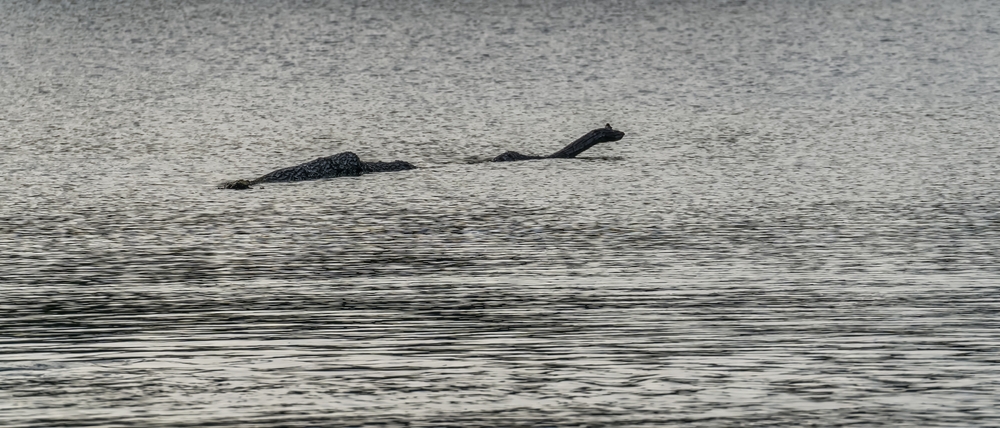
Every great lake seems to earn a great monster, and Flathead is no exception. Locals affectionately call theirs Flessie, a nod to Scotland’s famous Loch Ness resident. The creature is usually described as an eel or serpent-like animal, twenty to forty feet long, with a wavy body, dark brownish to blue-black skin, and steel-gray eyes. Whether it is a sturgeon, a trick of the light, or something science has not caught up with, the story has endured for generations.
The First Sighting in 1889
The legend traces back to 1889, when Captain James C. Kerr was piloting the steamboat U.S. Grant across the lake. Kerr and roughly 100 passengers reportedly spotted what first looked like a log or an oncoming boat. As it drew closer, the object appeared to be a large, whale-like creature moving through the water. According to the account, one passenger fired a shot, and the creature dove out of sight. That single moment on a 19th-century steamer became the founding chapter of one of Montana’s most durable mysteries.
Decades of Recorded Sightings
The legend might have faded if not for careful record-keeping. Laney Hanzel, a former Montana Fish, Wildlife and Parks fish biologist who spent roughly 30 years working on the lake, began formally documenting reports in 1993 at the request of a cryptozoologist. The busiest single year on record was that same 1993 season, when Hanzel logged 13 separate sightings. Over the decades the running total has climbed past 100 documented reports, with encounters described consistently enough that many witnesses had never spoken to one another.
| Legend / Site | The Story | Where / How To Experience It |
|---|---|---|
| Flessie, the Flathead Lake Monster | First reported in 1889 by Captain Kerr and about 100 steamboat passengers; more than 100 sightings logged since. | Open water anywhere on the lake, especially calm mornings near Polson Bay and the deep central basin. |
| Wild Horse Island | Named for horses the Salish and Kootenai hid there; now a 2,164-acre state park with bighorn sheep and wild horses. | Reachable only by boat; paddle or kayak from Big Arm or nearby shorelines for day-use exploration. |
| Steamboat Era | Vessels like the U.S. Grant once ferried cargo and passengers before roads reached the valley. | Polson and the southern shore, where much of the early lake commerce was centered. |
Wild Horse Island: History Written in Hoofprints
If Flessie is the lake’s great question mark, Wild Horse Island is its living history book. Sitting off the western shore near Big Arm, it is the largest island on Flathead Lake, covering approximately 2,164 acres of grassland, timber, and rocky shoreline. It is large enough to feel remote, yet close enough that a determined paddler can reach it on a calm day.
How the Island Got Its Name
The name is not marketing. For centuries, the Salish and Kootenai people used the island as a natural corral, pasturing their horses there to protect them from being stolen by rival tribes. The surrounding water served as a fence no thief could easily cross. That practical piece of Indigenous strategy is the direct origin of the name that stuck. The island remained part of the Flathead Indian Reservation from its creation in 1872 until 1904, when the land was divided into individual plots, and homesteaders arrived in the years that followed.
The Wildlife That Lives There Now
Protected as a Montana state park since 1977, the island is now a day-use wildlife refuge with no overnight camping. A small band of wild horses still roams the interior, a fitting echo of the island’s name, though visitors are asked to keep their distance. The bigger draw for many wildlife watchers is the bighorn sheep. The herd is so genetically robust that three of the top five bighorn rams recorded by the Boone and Crockett Club between 2015 and 2018 came from Wild Horse Island. Mule deer, bald eagles, falcons, and waterfowl round out the cast, making a quiet hike across the island feel like stepping into a wilder version of Montana.
Why the Lore Sticks
Part of what keeps these stories alive is the lake itself. Flathead is vast, deep, and startlingly clear, which means the imagination has plenty of room to wander. A floating log at dawn really can look like a serpent, and a herd of horses on a remote island really did outsmart generations of would-be thieves. The legends persist because the setting makes them feel possible. For travelers, that blend of documented history and open-ended mystery is exactly what turns a lake day into a story worth retelling back home.
Frequently Asked Questions
Is the Flathead Lake Monster real?
No scientific evidence confirms a large unknown creature in the lake, and some sightings are likely large fish such as sturgeon or optical illusions on the water. That said, more than 100 sightings have been documented since 1889, and no single explanation accounts for all of them, which is why the legend endures.
When was the first Flathead Lake Monster sighting?
The first widely cited report came in 1889, when steamboat captain James C. Kerr and roughly 100 passengers aboard the U.S. Grant reported seeing a large creature in the water.
Can you visit Wild Horse Island?
Yes. Wild Horse Island is a Montana state park open for day use only, and it is reachable exclusively by boat. There is no camping, no drinking water, and no services on the island, so visitors should plan to pack in and pack out everything they bring.
Are there really wild horses on Wild Horse Island?
Yes, a small band of wild horses still lives on the island, along with bighorn sheep, mule deer, and bald eagles. Visitors are asked to observe all wildlife from a respectful distance and never approach or feed the animals.
What is the best way to explore the legends?
The lore is tied to the water, so a paddleboard or kayak lets travelers move at their own pace, hug the quiet shorelines, and reach places like Wild Horse Island that roads cannot.
Explore the Legends From the Water
Flathead Lake rewards the curious. The Flathead Lake Monster has been slipping in and out of sight since 1889, and Wild Horse Island still guards its horses and bighorn sheep the way it has for well over a century. The best way to meet these stories is to get out on the water and look for yourself, whether that means scanning the deep central basin for a ripple that should not be there or paddling toward Wild Horse Island for an afternoon among the wildlife.
Paddle Board Outfitters in Somers makes that easy. This family-run outfit rents paddleboards, kayaks, and boats, with free delivery on two-day-or-longer rentals to Whitefish, Kalispell, Bigfork, Somers, and Lakeside. One respectful reminder for Wild Horse Island: it is a protected day-use refuge, so keep your distance from the horses and bighorn sheep, pack out everything you bring, and leave the island exactly as wild as you found it.