Top Parks and Landmarks Around Flathead Lake, Montana
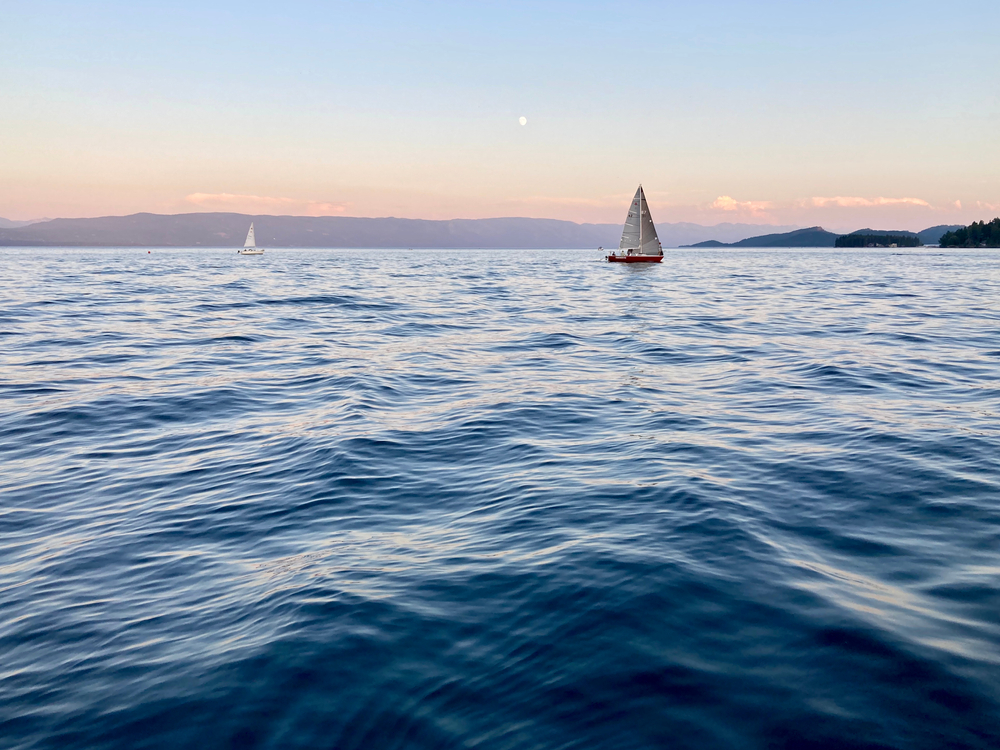
Flathead Lake is not a single destination so much as the center of a region that packs an extraordinary density of parks, cultural sites, historic landmarks, and charming small towns into a 185-mile shoreline. The largest natural freshwater lake west of the Mississippi covers nearly 200 square miles in northwest Montana, and its surrounding landscape includes active tribal territory, state parks spanning six separate units, frontier-era history, a nationally recognized arts village, and one of the most unusual island state parks in the American West. Whether you are based in Somers for a week on the water or making a day trip from Kalispell, what follows is a practical guide to the landmarks and parks that make this region worth exploring beyond the shoreline.
TL;DR
- Flathead Lake State Park is not one park but a seven-unit system spread around the lake, each with distinct character, from the forested solitude of West Shore to the boat-access-only island at Wild Horse Island.
- Somers Beach State Park, acquired in 2021, is the newest addition to the lake’s protected shoreline and sits just minutes from Paddle Board Outfitters on the northwest shore.
- The southern half of the lake falls within the Confederated Salish and Kootenai Tribes’ Flathead Indian Reservation, one of the most historically and culturally significant landscapes in the American West.
- Polson, at the lake’s southern end, anchors the tribal territory with museums, waterfront parks, and the Flathead River’s Seli’s Ksanka Qlispe’ Dam landmark.
- Bigfork on the northeast shore is recognized nationally as one of the 100 Best Small Art Towns in the Nation, with galleries, live theater, and direct lake access.
- The east shore cherry orchards along Highway 35 are a seasonal landmark in their own right, and roadside stands run through July and August.
Flathead Lake: The Landmark at the Center of Everything
Before covering individual parks and sites, the lake itself deserves context as a landmark. Flathead Lake measures approximately 28 miles long and 15 miles wide, with a maximum depth of 371 feet. Its water clarity is exceptional for a lake of its size, and the combination of that clarity with the framing by the Mission Mountains to the east and the Salish Mountains to the west makes it one of the most visually striking lakes in the contiguous United States. The lake sits at an elevation of 2,893 feet and was carved out of the landscape by glacial activity during the last ice age, which explains both its depth and the dramatic topography surrounding it. Source: Montana Fish, Wildlife and Parks / Visit Montana
The southern half of the lake lies entirely within the boundaries of the Flathead Indian Reservation, which means recreation in that portion, including fishing, requires a tribal recreation permit purchased separately from Montana state licenses. Non-fishing activities such as swimming and paddling on the lake’s southern half do not require a permit, but visitors should understand the boundary and respect tribal sovereignty throughout. Montana Fish, Wildlife and Parks maintains 13 public access sites around the full perimeter of the lake.
Flathead Lake State Park
Flathead Lake State Park is technically a single entity under Montana Fish, Wildlife and Parks administration, but it operates as a system of seven distinct units positioned around the lake. The units were consolidated under one park designation in 1992. Each occupies a different stretch of shoreline and offers a different mix of terrain, views, camping, and access. Taken together, they give visitors an almost complete circuit of the lake’s character.
Wild Horse Island Unit
Wild Horse Island is the most exceptional of the seven units and is covered in detail below as a standalone landmark. At 2,164 acres, it is the largest island on Flathead Lake and accessible only by boat. It is day-use only, has no camping, and carries regulations protecting its resident bighorn sheep population of 160 to 200 animals, five wild horses, bald eagles, mule deer, and a Palouse Prairie ecosystem found in only two other locations in Montana.
Big Arm Unit
Located 15 miles north of Polson on the west shore via U.S. Highway 93, the Big Arm Unit sits on Big Arm Bay and is the standard departure point for boat access to Wild Horse Island. The unit covers 237 acres and has a long pebble beach that works well for swimming and sunbathing. It also has a boat launch, 41 campsites including three yurts, a group campsite, and an archery range added in recent years. The views from the beach extend across the bay toward the Mission Mountains. A tribal recreation permit is required at this unit. Source: Montana FWP
West Shore Unit
The West Shore Unit sits 20 miles south of Kalispell on Highway 93 and covers 129 forested acres on the western edge of the lake. It is one of the more secluded units, with glacially carved rock formations along the shoreline and views east toward the Swan and Mission Mountain Ranges. The campground has 33 campsites including tent-only sites. A kayak and paddleboard concession operates from this unit seasonally. For visitors wanting the most removed experience with the fewest crowds, West Shore is the most consistent option.
Wayfarers Unit
The Wayfarers Unit is located just south of downtown Bigfork on Highway 35, covering 67 acres and sitting at the intersection of the lake and the Swan River’s outflow. It is the most accessible unit from Bigfork and arguably delivers the best sunset viewing in the Flathead Valley from its rocky cliff sections. The unit has a river rock swimming beach, boat launch, picnic areas, and a campground with both RV and tent sites. This is the most visited unit on the east shore and works well as a starting point for anyone exploring Bigfork.
Yellow Bay Unit
Yellow Bay sits along the east shore roughly midway between Bigfork and Polson and is the smallest of the units. It sits at the deepest point of the lake, where the water reaches 369 feet. In spring, cherry blossom trees on the surrounding hillsides make it one of the most photogenic spots on the entire lake. The unit has sandy beaches and tent camping available from May through September. It is a quieter alternative to Wayfarers for east-shore visitors who prioritize calm water and fewer people.
Finley Point Unit
Finley Point extends into the lake on a narrow peninsula about 12 miles north of Polson on the southeast shore. The unit sits in a Ponderosa pine forest and is more boat-oriented than most other units, with 18 RV campsites with electricity, seven tent-only sites, and four boat camping slips. It functions as a hub for fishing and boating on the southern portion of the lake. A joint state/tribal fishing license is required here given its proximity to the reservation boundary.
Somers Beach Unit
Somers Beach is the newest addition to the Flathead Lake State Park system, acquired by Montana Fish, Wildlife and Parks in October 2021 and formally developed over the following years. The unit covers 106 acres on the northwest shore and provides nearly half a mile of public shoreline access. When the lake level drops from fall through spring, a wide sandy beach is exposed. In summer, the shoreline becomes rocky at water level. The unit borders the Flathead Lake Waterfowl Production Area managed by the U.S. Fish and Wildlife Service, which is closed to public access during bird nesting season from March 1 through July 15. The combined protected land corridor along the north shore extends to approximately 2,400 acres. Source: Montana FWP
For visitors staying in Somers, this is the closest state park unit and the most direct walking or paddling access to protected lake shoreline. Paddle Board Outfitters operates nearby, and the combination of a paddle from Somers and a walk along the Somers Beach unit shoreline is one of the most straightforward full-day options for guests based on the north end of the lake.
Flathead Lake State Park Units at a Glance
| Unit | Shore | Size | Best For | Key Feature |
| Wild Horse Island | West | 2,164 acres | Wildlife, day hikes | Boat-only, wild horses, bighorn sheep |
| Big Arm | West | 237 acres | Wild Horse Island access, camping | Long pebble beach, yurts, archery |
| West Shore | West | 129 acres | Solitude, swimming | Glacial rock formations, scenic views |
| Wayfarers | East | 67 acres | Families, sunsets, boating | Rocky cliffs, boat launch, near Bigfork |
| Yellow Bay | East | Small | Quiet beach, spring blossoms | Deepest lake section, cherry trees |
| Finley Point | East | Peninsular | Fishing, boating, RVs | Boat slips, Ponderosa pine forest |
| Somers Beach | North | 106 acres | Swimming, birding, shoreline walks | Newest unit, sandy beach, wetlands |
Wild Horse Island State Park
Wild Horse Island warrants its own section because it is categorically different from every other park around the lake. It is the largest island on Flathead Lake at approximately 2,164 acres, and the largest island in a freshwater lake west of Minnesota. The Salish-Kootenai people used it for centuries to pasture horses, keeping them safe from rival tribes by using the lake as a natural barrier. That practice gave the island its name.
The island has been protected as a state park since 1977 and is managed by Montana Fish, Wildlife and Parks. It has roughly four miles of interconnected hiking trails plus extensive off-trail terrain. Wildlife includes a bighorn sheep population fluctuating between 160 and 200 animals, five wild horses, mule deer, bald eagles, osprey, falcons, and rare Palouse Prairie plant communities. Camping, fires, pets, and bikes are all prohibited. The island is accessible only by private boat or charter from Polson, Bigfork, or Rollins marinas.
Cultural and Historic Landmarks Around Flathead Lake
The Flathead Indian Reservation and the Confederated Salish and Kootenai Tribes
The southern half of Flathead Lake and the entire Mission Valley south of the lake sit within the Flathead Indian Reservation, homeland of the Confederated Salish and Kootenai Tribes (CSKT). The reservation encompasses approximately 1.25 million acres and was established by the Hellgate Treaty of 1855. The CSKT includes the Salish, Kootenai, and Pend d’Oreille peoples, whose presence in the region precedes European contact by thousands of years.
Visiting this territory means being on living tribal land, not simply a cultural heritage zone. The CSKT governs natural resources across the reservation including the southern lake, the Flathead River, and the National Bison Range, which Congress returned to tribal ownership in 2021. Visitors who want to understand the full context of what they are seeing around Flathead Lake need to understand that context begins with the Confederated Salish and Kootenai Tribes.
Three Chiefs Cultural Center, Pablo
The Three Chiefs Cultural Center in Pablo, located about 12 miles south of Polson on Highway 93, is the most direct cultural introduction to the CSKT and their history. The center houses exhibits covering the Horse and Tribal History of the Salish, Kootenai, and Pend d’Oreille peoples, along with significant traditional artifacts and a gift shop featuring tribal artisans. Pablo sits in the heart of the Mission Valley, with the Mission Mountains visible to the east throughout the drive.
Polson-Flathead Historical Museum, Polson
The Polson-Flathead Historical Museum opened in 1972 to document the history of both the Mission Valley and the Flathead Indian Reservation. Its collection includes the Lambert Trading Post, which was the first building in Polson and dates to the 1870-1880 period, along with a Native American collection from the Salish and Kootenai Tribes, the Allard Stagecoach that ran between Polson and Ravalli from 1908 to 1910, a chuck wagon, antique fire engines, and a replica pioneer homestead interior. Source: Visit Montana / Polson Flathead Historical Museum
The museum is also home to exhibits on the Flathead Lake Monster, locally known as Nessie, with sightings documented going back over a century. A Nessie statue now stands at Sacajawea Park in downtown Polson, adding an unexpected touch of local mythology to what is otherwise a serious historical collection.
Miracle of America Museum, Polson
The Miracle of America Museum in Polson is Montana’s largest and most eclectic museum, featuring an extremely wide range of Americana: vintage motorcycles dating to 1923, vehicles from 1914, a large military collection, 41 village buildings, and outdoor metal sculptures. Its scope is deliberately broad and somewhat overwhelming, which is part of its appeal. It operates as a living collection that spans American history well beyond the Flathead region.
Ninepipes Museum of Early Montana, Charlo
Located in Charlo, about 25 miles south of Polson on Highway 93, the Ninepipes Museum of Early Montana preserves the intersection of the Flathead Indian Reservation’s tribal history and the early settler period. Its collection includes Native American beadwork, western art, hunting artifacts, horse tack, and life-size dioramas depicting an early trading post, the St. Ignatius Mission Church, and an Indian camp. The museum sits directly across Highway 93 from the Ninepipe National Wildlife Refuge and adjacent walking trails.
St. Ignatius Mission Church, St. Ignatius
The St. Ignatius Mission is one of the most significant historic structures in northwest Montana. Founded in 1854, the current church building was completed in 1891 and is renowned for its 58 frescoes painted by Brother Joseph Carignano, an untrained Jesuit brother who created detailed murals covering the walls and ceilings with biblical scenes and saints. The mission is located in the town of St. Ignatius, about 45 miles south of Polson. The grounds include a small museum covering the missionary period and tribal history. Source: Indian Reservation Info
Seli’s Ksanka Qlispe’ Dam (formerly Kerr Dam), Polson
A short five miles from Polson, the Seli’s Ksanka Qlispe’ Dam on the Flathead River is a landmark of both natural and political significance. Renamed in 2015 from Kerr Dam to reflect its return to CSKT stewardship, it controls water flow out of Flathead Lake into the Flathead River. The site offers a dramatic overlook of the gorge and serves as a visible symbol of the tribes’ ongoing connection to and management of the watershed that surrounds the lake. Whitewater rafting on the Flathead River below the dam is a popular summer activity.
Somers and the North Shore
Somers sits on the northwest corner of Flathead Lake and serves as the base of operations for Paddle Board Outfitters. The town itself is small, but its position at the top of the lake makes it one of the best launch points for exploring the full length of the shoreline by water. The Somers Fishing Access Site and the adjacent Far West Cruises dock anchor the public waterfront.
The town has a quiet, unhurried character that distinguishes it from the busier tourist traffic in Bigfork and Polson. The Somers Company Store, a historic building dating to the early 1900s, is a surviving artifact of the town’s logging and railroad heritage from the period when Somers was a significant timber processing hub for the Flathead Valley. The north shore corridor from Somers east toward Bigfork is flanked by the Flathead Lake Waterfowl Production Area and Somers Beach State Park, making it one of the most ecologically protected stretches of shoreline on the entire lake.
Bigfork: The Village by the Bay
Bigfork occupies the northeastern corner of Flathead Lake where the Swan River flows into the lake, and it has earned a national reputation as a cultural destination that most visitors do not associate with northwest Montana. It has been recognized as one of the 50 Great Towns of the West and one of the 100 Best Small Art Towns in the Nation. The town is built around a western art theme and supports multiple galleries, two nearby bronze foundries, fine dining, boutique shops, and the Bigfork Summer Playhouse. Source: Montana’s Flathead Lake / Glacier Country Montana
The Bigfork Summer Playhouse is a professional theater company that has been producing Broadway-caliber musicals, comedies, and dramas for more than 60 years. It runs productions Monday through Saturday during the summer season and is genuinely one of the more surprising cultural institutions in a region most visitors associate primarily with the outdoors. The festival calendar includes the Bigfork Festival of the Arts in early August, featuring more than 150 artists and exhibitors in downtown.
Wayfarers State Park and Downtown Access
Wayfarers State Park sits just south of the downtown Bigfork core on Highway 35 and functions as the main public access point for the village’s lake frontage. The public dock on Grand Avenue downtown provides additional waterfront access for arriving by boat. The combination of a Bigfork public dock arrival, a walk through the gallery district on Electric Avenue, and an evening at the Summer Playhouse is one of the most complete single-day cultural experiences available within the Flathead Lake region.
The East Shore Cherry Orchards
The Highway 35 corridor along the east shore of Flathead Lake between Bigfork and Polson is defined as much by agriculture as by shoreline scenery. The microclimate produced by the lake, combined with the eastern exposure to the Mission Mountains, creates ideal growing conditions for sweet cherries, as well as apples, plums, and pears. Flathead cherries have a regional reputation for exceptional sweetness and are available at roadside stands from late July through August.
The orchards in bloom during spring are a landscape event in their own right and draw visitors specifically to drive the east shore. Yellow Bay State Park at the midpoint of the corridor is surrounded by cherry trees that produce particularly vivid blossoms, making it one of the most photographed locations on the lake during the brief spring window. Polson’s Cherry Festival, held annually in downtown, celebrates the harvest with food, live entertainment, and crafts.
Pablo National Wildlife Refuge
The Pablo National Wildlife Refuge sits south of Polson at the southern end of Flathead Lake and protects 2,542 acres of wetlands and grasslands in the Mission Valley. It is managed by the U.S. Fish and Wildlife Service and provides critical habitat for migratory waterfowl and shorebirds. The refuge is one of the most productive birding sites in northwest Montana, attracting tundra swans, Canada geese, sandhill cranes, and numerous duck species during spring and fall migration. Access is managed to protect nesting habitat, with certain areas closed seasonally.
Parks and Landmarks Reference Guide
| Landmark / Park | Location | Category | Why It Matters |
| Wild Horse Island State Park | West Shore / Boat-only | State Park / Nature | Largest lake island, wild horses, bighorn sheep |
| Big Arm Unit, FLP | West Shore, Polson area | State Park | Wild Horse Island access point, yurts |
| West Shore Unit, FLP | West Shore, S. of Kalispell | State Park | Glacial formations, kayak/SUP concession |
| Wayfarers Unit, FLP | East Shore, Bigfork | State Park | Best sunsets, boat launch, Swan River views |
| Yellow Bay Unit, FLP | East Shore, mid-lake | State Park | Cherry blossoms, deepest lake point |
| Finley Point Unit, FLP | East Shore, S. of lake | State Park | Boat slips, Ponderosa pine forest |
| Somers Beach State Park | North Shore, Somers | State Park (Newest) | Half mile shoreline, wetlands, birding |
| Three Chiefs Cultural Center | Pablo | Cultural / Tribal | CSKT history, artifacts, horse and tribal exhibits |
| Polson-Flathead Historical Museum | Polson | History | Pioneer and tribal history, stagecoach, trading post |
| Miracle of America Museum | Polson | History / Americana | Montana’s largest museum, vintage vehicles, military |
| Ninepipes Museum | Charlo | History / Tribal | Beadwork, dioramas, mission church, tribal artifacts |
| St. Ignatius Mission Church | St. Ignatius | Historic / Cultural | 1891 church with 58 frescoes, missionary history |
| Seli’s Ksanka Qlispe’ Dam | 5 mi. from Polson | Historic / Natural | Tribal dam on Flathead River, scenic gorge overlook |
| Bigfork Village | NE Shore | Arts / Cultural | 100 Best Small Art Towns, Summer Playhouse, galleries |
| East Shore Cherry Orchards | Hwy 35 east shore | Agricultural / Scenic | Roadside stands July-August, Cherry Festival in Polson |
| Pablo National Wildlife Refuge | S. of Polson | Wildlife Refuge | Waterfowl habitat, birding, migratory species |
Planning Your Visit: What to Know
Tribal Recreation Permits
The southern half of Flathead Lake and all land within the Flathead Indian Reservation require a tribal recreation permit for fishing. Non-fishing water recreation, including swimming and paddling, does not require a permit on the lake itself. Visitors planning to access state parks on the southern and western shores, including Big Arm, Finley Point, and Wild Horse Island, should verify current permit requirements at csktribes.org or with local vendors in Polson before their visit.
Seasonal Considerations
Summer is peak season from mid-June through August, when all park units are operating at full services, the cherry orchards along Highway 35 are producing, and cultural events in Bigfork and Polson are in full swing. Spring offers the most dramatic wildflower and cherry blossom displays, particularly at Yellow Bay and along the east shore. Fall brings smaller crowds and stable weather into September and October, with excellent wildlife viewing as bighorn sheep rut season approaches on Wild Horse Island. Most campgrounds close for the season in September.
Navigating Around the Lake
Three highways circle Flathead Lake: U.S. Highway 93 on the west shore, Montana Highway 82 on the north, and Montana Highway 35 on the east. The full scenic drive around the lake covers approximately 90 miles and is worth doing in one direction or the other at least once. The east shore on Highway 35 has more pullouts, state park access, and orchard stands. The west shore on Highway 93 is faster and connects to Big Arm and the Wild Horse Island access point.
Frequently Asked Questions
How many state parks are there on Flathead Lake?
Flathead Lake State Park includes seven units: Wild Horse Island, Big Arm, West Shore, Wayfarers, Yellow Bay, Finley Point, and Somers Beach. All are managed by Montana Fish, Wildlife and Parks. Each unit operates independently with its own access point, amenities, and seasonal schedule.
Do you need a permit to visit the Flathead Indian Reservation?
Non-fishing water recreation on the southern half of Flathead Lake does not require a tribal permit. Fishing anywhere on the reservation, including the southern lake, requires a separate tribal fishing license in addition to a Montana state fishing license. Land-based recreation on tribal land outside of designated state park boundaries requires a tribal recreation permit. Current permit information is available at csktribes.org.
What is the best town to base yourself near Flathead Lake?
It depends on your priorities. Bigfork on the northeast shore offers the most concentrated arts, dining, and cultural programming alongside direct lake access and proximity to hiking in the Jewel Basin. Polson on the south end provides the most historical and cultural depth, particularly for visitors interested in tribal history and the Mission Valley museums. Somers on the north shore, where Paddle Board Outfitters is located, is the best base for water-focused itineraries that include extended paddling time on the full lake.
What is the Flathead Lake Monster?
The Flathead Lake Monster, locally known as Nessie, is a regional legend with reported sightings going back over a century. The reports describe a large aquatic creature on the lake surface. The Polson-Flathead Historical Museum includes exhibits on the legend, and a Nessie statue stands in Sacajawea Park in downtown Polson. No confirmed scientific evidence of the creature exists, but the legend is a genuine part of the lake’s cultural fabric.
When is the best time to see the cherry orchards on Highway 35?
Cherry blossoms along the east shore typically peak in late April to mid-May, depending on the year’s temperatures. The harvest runs late July through August, when roadside stands operate from Bigfork south toward Polson. Yellow Bay State Park is especially scenic during blossom season given its surrounding orchard hillsides. The Polson Cherry Festival is held annually in downtown Polson to celebrate the harvest.
Summary
The parks and landmarks around Flathead Lake span nearly every category of significance, from one of the most unusual island state parks in the American West to living tribal territory with a documented history spanning thousands of years. The seven units of Flathead Lake State Park cover nearly every section of the 185-mile shoreline, and the newest, Somers Beach, sits closest to the north shore operations of Paddle Board Outfitters. The cultural institutions in Polson and the tribal lands of the Confederated Salish and Kootenai Tribes give the region a historical depth that most outdoor destination areas lack. Bigfork functions as a genuine arts village with a cultural program year-round.
Taken together, these landmarks give a Flathead Lake visit far more structural substance than a week of water recreation alone can provide. The lake is the anchor, but the surrounding parks, towns, and sites are what make the region worth building an extended trip around.